


The first sound I remember from my UAE trip was not the roar of a supercar or the clink of champagne glasses. It was the soft rattle of my suitcase wheels on the tiled floor at Dubai International’s Terminal 3 at 2 a.m., followed by the quiet, efficient "Welcome" from the immigration officer who stamped my passport without small talk. Outside, a blast of humid heat fogged my glasses and, instead of a fleet of sports cars, I saw a long, orderly line of beige taxis and a handful of sleepy families juggling strollers and duty-free bags. For a trip I had imagined as pure futuristic spectacle, my very first hour felt surprisingly ordinary and human. That set the tone for almost everything that followed.
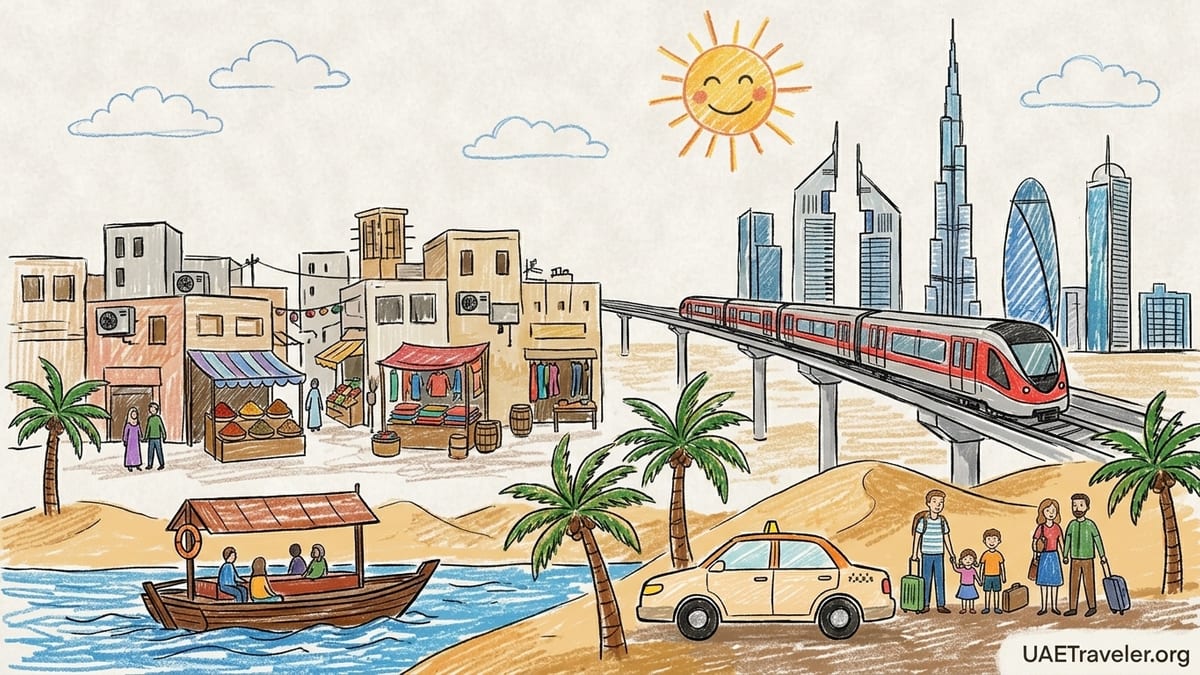
Did My Arrival Match the Ultra-Luxury Image I Had in Mind?
Before I landed in Dubai, I pictured an airport dripping in gold, a lobby that felt like a five-star hotel and maybe even a fountain in the baggage hall. In reality, Dubai International is modern and busy but also functional and, at 2 a.m., slightly frayed at the edges. The immigration hall was bright and efficient rather than glamorous. I was processed quickly, and the most noticeable luxury was how smoothly it all moved, not any obvious opulence. What struck me was how many of my fellow passengers were workers and families in casual clothes, not influencers in designer outfits. It already felt more like a working city than a movie set.
My first practical surprise came with the taxi fare. I knew taxis were plentiful, but I had not checked what an airport ride actually cost. The starting fare from Dubai International was 25 dirhams, higher than the standard street hail starting fare in the city, and my ride to Business Bay added up to just under 80 dirhams with the meter ticking steadily and a charge each time we passed a toll gate. I had assumed rideshares would dominate, but at the airport the official beige taxis run the show. In hindsight, I would have familiarized myself with the fare structure and estimated the cost on a map beforehand instead of mentally converting on the fly at three in the morning.
What also surprised me was the mix of scenery on that first highway drive. I expected an unbroken strip of architectural icons from the airport onward. Instead, the route out of DXB runs past a mix of older low-rise buildings, billboards, and construction sites with flashes of skyline in the distance. It did not diminish the excitement; if anything, it helped me adjust my expectations from a fantasy city to a real urban area with layers and history. The first advice I would give another first-timer is to treat that first ride exactly like arriving in any major city: note the neighborhoods, ask the driver where he lives, and pay attention to the everyday details instead of waiting only for the big landmarks.
Was Everything Really Shiny and Futuristic All the Time?
I had built up Dubai and the wider UAE in my head as wall-to-wall futuristic architecture, as if every street looked like the view from the Burj Khalifa observation deck. The reality was far more varied, sometimes in the space of a single metro stop. On my second day, I took the Red Line from Business Bay towards the Dubai Mall. The elevated tracks give a sweeping view of the skyscrapers, and that part did live up to the postcard image. Sleek glass towers, the twisted Cayan Tower in the distance, and a sea of cranes stacking new buildings into the skyline all confirmed that futuristic vibe.
But step off the Metro a few stops later, or head northwest toward older districts, and the scenery changes quickly. When I continued later to Al Fahidi and Bur Dubai, the glass towers gave way to older, boxier buildings, air conditioning units hanging from facades, narrow lanes, and low-rise apartment blocks. In Deira, I walked past electronics shops with handwritten signs and tiny cafeterias selling shawarma wraps for under 10 dirhams. I went from a climate-controlled megamall to streets where workers were unloading sacks of spices and fabrics within an hour. The surprise was not that the futuristic image was wrong, but that it was just one layer of a much denser city.
Some modern icons also felt different in person. The Museum of the Future, which I only saw from the outside on this trip, looked even more dramatic than its photos when the sun caught the calligraphy cut-outs, but it was also planted along a very busy Sheikh Zayed Road with traffic honking beneath it. The smooth marketing images I had seen never included the construction noise. For a first-time visitor, the practical lesson is simple: whenever you plan to see a famous landmark, look at it on a map in relation to a Metro stop, a main road, or older neighborhoods nearby. It will help you decide whether you want the full, slightly messy street-level experience or a quick, curated visit from a taxi door to a ticket counter.
How Did the “Endless Luxury” Narrative Hold Up Day to Day?
One of my strongest assumptions was that the UAE would feel endlessly luxurious and expensive at every turn. I imagined marble lobbies, designer boutiques, and meals that might quietly drain my savings. Parts of Dubai absolutely live up to that image. Inside Dubai Mall, I wandered through polished corridors lined with global luxury brands, then out onto the promenade facing the Burj Khalifa where restaurants overlooked the fountain shows. A coffee and pastry in a mall café cost just over 30 dirhams, and a mid-range sit-down meal in the same area could easily reach 80 to 120 dirhams per person without alcohol. Prices in these zones cater to tourists and high earners, and you feel that quickly when the bill arrives.
The surprise was how quickly and dramatically prices dropped when I stepped outside the polished bubble. In Al Fahidi Historical Neighbourhood, I stopped at a small café for a plate of hummus, fresh bread, and tea for roughly what a single mall coffee had cost. Later in Deira, I grabbed a shawarma and a soft drink from a corner cafeteria for around 15 dirhams. These were not once-in-a-lifetime meals, but they were fresh, filling, and kind to my budget. I realized I had underestimated how wide the price spectrum would be and how much control I actually had over my daily spending simply by changing neighborhoods and styles of restaurant.
Accommodation told a similar story. I chose a mid-range hotel in Business Bay that marketed itself on skyline views and easy access to Dubai Mall. The room was comfortable and, by European standards, fairly priced for a business district. But when chatting with other travelers on tours, I met people staying in Deira and Bur Dubai in simpler three-star hotels or serviced apartments for considerably less per night. They had slightly longer Metro rides to attractions but more local food options on their doorstep and easier access to Dubai Creek. If I had understood the trade-offs better, I might have split my stay between a central modern area and an older district instead of committing to one base.
What Happened When I Went Looking for “Traditional Arabia”?
In my pre-trip imagination, the UAE’s traditional culture would be concentrated in one or two heritage areas with restored wind towers, quiet courtyards, and perfumed alleyways. I did find that side in the Al Fahidi Historical Neighbourhood, where sand-colored houses, shaded sikkas, and small museums tried to tell the story of old Dubai. Walking those lanes in the late afternoon, with the call to prayer drifting across the creek, was one of the few moments that felt exactly as I had pictured it. I lingered over Arabic coffee in a courtyard café and explored a small art space inside a restored house. It felt calm and reflective, but also curated for visitors like me.
The deeper surprise came when I crossed Dubai Creek by abra. I had read ahead that the wooden boats charge a few dirhams per crossing, paid in cash to the boatman, and that detail was reassuringly accurate. On the water, with a light breeze cutting the heat, I finally had that “between worlds” feeling I had been chasing: modern towers behind me, traditional trade routes ahead. Landing on the Deira side, the gold and spice souks were lively but more commercial than I had imagined. Many stalls sold similar items, and my conversations with vendors often began with firm offers and only gradually warmed into something more personal when I made clear I was not rushing.
The lesson for another first-time visitor is to come prepared for a blend of the authentic and the staged. The older areas preserve genuine elements of Emirati and regional culture, but tourism has inevitably shaped them. If you want quieter, more local experiences, go early in the morning or on weekday evenings when the crowds are thinner, and let yourself wander beyond the first rows of souvenir shops. Additional researched advice: travelers who have the time to leave Dubai entirely often find a stronger sense of traditional architecture and slower pace in places like Sharjah’s heritage area or internal parts of Ras Al Khaimah. Those require more planning and, ideally, a rental car or organized tour, but they expand the picture of the UAE beyond Dubai’s polished core.
Were the Rules and Dress Codes as Strict as I Expected?
Before arriving, I read a mix of warnings and reassurances about laws, dress codes, and public behavior in the UAE. I imagined strict enforcement everywhere, with security staff constantly correcting tourists. In practice, what I encountered in Dubai was a balance between clear rules and a lot of quiet flexibility, especially in international areas. In Dubai Mall and around the Dubai Fountain, I saw people in everything from abayas and kanduras to shorts and t-shirts. Most visitors erred on the side of modest but casual clothing: shoulders covered in the evening, longer shorts or light trousers, and dresses that reached the knee.
Inside religious sites or more conservative neighborhoods, expectations rose a notch. At Jumeirah Mosque, where I joined a guided visit, staff offered clear guidance about covering shoulders and knees, and women were given abayas or scarves if needed. The tone was welcoming, not scolding, but the rules were non-negotiable. On public transport, signs reminded passengers to avoid eating or drinking and to sit in the correct carriage, with dedicated sections for women and children on Metro trains. I watched one tourist family gently redirected when they sat down in that reserved area without realizing it. It was a polite interaction, but a reminder that the regulations are real, not just suggestions.
My main surprise was how little trouble it took to stay within the lines once I adjusted mentally. The advice I would pass on is straightforward: pack light layers that cover shoulders and knees, carry a scarf if you are unsure, and pay attention to signage in malls and stations. You do not need to be anxious, but you do need to be observant. Additional researched advice: regulations around public displays of affection, alcohol consumption, and photographing certain government or military sites are stricter than in many Western countries. Enforcement can vary, but the potential consequences are serious enough that it is worth reading an up-to-date summary of do’s and don’ts on an official tourism or government site before you travel.
How Did I Misjudge Distances, Transport and Daily Logistics?
On a map, Dubai’s main attractions do not look that far apart. I assumed that with the Metro running the length of the city and taxis filling the gaps, getting around would feel effortless. My first two days disabused me of that idea. The Metro itself is clean, air-conditioned, and affordable, with fares for typical journeys measured in a handful of dirhams depending on zones and card type. The challenge is that many sights sit a fair walk from the nearest station, often through malls, over pedestrian bridges, or along wide, sun-baked roads. My walk from Burj Khalifa/Dubai Mall station to the actual mall, and then to the tower entrance, felt like a small expedition under artificial light.
I also underestimated travel times when changing districts. Going from Business Bay to the creek area by Metro took longer than I expected, and then I added more time walking between stations, souks, and abra landings. In the afternoon heat, those extra minutes felt much longer. By the time I reached some neighborhoods, I had already used up part of my energy for exploring. If I had plotted my days more carefully, grouping nearby sights and allowing for generous transfer times, I could have reduced that slow drain of effort.
Taxis filled some gaps, but again, I ran into surprises. The meter starts with an initial fare and climbs with distance and time, and journeys that looked short on the map sometimes cost more than I anticipated because we crossed toll gates or got stuck in traffic near popular malls. One downtown-to-marina ride in late afternoon came close to 70 dirhams, and another cross-town trip hit 100 dirhams when congestion added delay. It was never unreasonable for the distance covered, but the totals added up quickly across several days. For a first-timer watching their budget, the key is to use taxis strategically: connect gaps between Metro lines, travel during off-peak periods when possible, and check with your driver about likely toll routes before you set off.
Which Attractions Lived Up to the Hype and Which Felt Overly Commercial?
No first UAE visit feels complete without a stop at the Burj Khalifa. I booked a standard "At the Top" ticket for the lower observation decks in advance and still found myself queuing several times: for security, for the elevator, for the photo stations at the top. The views at sunset were genuinely spectacular, especially watching the desert horizon blush pink and the city lights flicker on. The surprise was not the height or the view, but how strongly the crowd and the in-house commercial push shaped the experience. Photo spots funneled visitors into queues for professional shots, and gift shop areas were hard to avoid on the way out. I was glad I went, but after doing it once I would recommend timing your visit for a quieter weekday slot and accepting that it is a polished, very commercial attraction rather than a meditative moment in the sky.
Dubai Mall itself felt similar: an impressive, air-conditioned city of brands and entertainment, but also a place where it was easy to lose both time and money without trying very hard. I was more charmed by the simpler pleasures around Dubai Creek. The abra ride, the sensory punch of the spice souk, and the sight of traditional dhows loading cargo at the wharf felt less controlled by a script, even though tourism has touched them deeply. One evening, watching the sun sink behind the skyline from the Deira side while sipping a sweet tea for a fraction of what a fountain-front coffee would cost, I realized that the moments I remembered most clearly were not the most expensive ones.
Additional researched advice: many travelers now compare Dubai’s newer attractions like the Ain Dubai wheel and various large themed parks with older, more organic sights and find mixed value. The big-ticket, purpose-built experiences can deliver impressive visuals but often come with high entry prices and the risk of feeling generic if you have visited similar attractions elsewhere. On a first trip, it can be wise to cap yourself at one or two major paid experiences and invest the rest of your time in neighborhoods, free public beaches, mosque tours, and creekside wandering, where your costs are lower and your contact with everyday life is higher.
What Costs Took Me by Surprise and Where Did I Actually Save?
Despite weeks of reading before my trip, the pattern of costs still surprised me. Everyday essentials like bottled water, simple snacks from supermarkets, and casual cafeteria meals were cheaper than I had budgeted for, especially outside high-end districts. I bought cold drinks and small groceries for only a few dirhams at local shops, and breakfasts built around bakery items or shawarma saved enough that I did not mind splurging occasionally on nicer dinners. Public transport, too, was friendly to my wallet once I committed to using it and learned how the fares were calculated.
What caught me off guard were the cumulative extras: coffee culture priced for an international clientele, admission fees to marquee attractions, and the premium baked into anything with a prime view or Instagram reputation. A drink at a rooftop bar with a skyline panorama could easily equal the cost of a full meal in a side-street restaurant. I also had not fully grasped how service charges and taxes were structured on restaurant bills. In many places, value-added tax and municipality fees were included in prices, but some venues added service charges or optional tips that pushed totals up another notch. I learned to scan the line items before paying rather than just glancing at the grand total.
On the positive side, I avoided one common cost trap almost by accident: I did not buy expensive add-ons like same-day VIP tickets for attractions, private hotel transfers from the airport, or all-inclusive desert packages upsold at hotel desks. Instead, I booked a modestly priced desert excursion through a mid-range operator with clear inclusions and pick-up from a Metro-adjacent hotel, which kept both price and travel time under control. Additional researched advice: for desert safaris in particular, reading recent reviews and verifying what is and is not included in the quoted price is crucial, as options range from budget group trips to premium private outings with big differences in quality, food, and time actually spent in the dunes.
The Takeaway
By the end of my first week in the UAE, my mental picture of the country had shifted from a two-tone image of desert and skyscrapers to something much more layered. The luxury and futuristic architecture that dominate social media are real, but they sit alongside cramped backstreets, modest apartments, local bakeries, and working docks that quietly keep the city running. What surprised me most was not that reality failed to match my expectations, but that it offered better stories when I let myself move beyond the narrow routes between headline attractions.
If there is a single lesson I would pass to another first-time visitor, it is to think of the UAE as a place of contrasts and to plan your days accordingly. Pair a big-name sight with an older neighborhood or a simple local meal. Use the Metro to see how districts change from stop to stop. Allow time for getting lost in Deira as well as getting perfectly framed shots of the Burj Khalifa. The trip will still deliver plenty of polished, photogenic moments, but it will also give you textures and conversations that do not fit neatly into a brochure.
Looking back, there are five specific things I would change on a return trip, each with a clear benefit. First, I would split my accommodation between a modern central area and an older district like Bur Dubai or Deira. That would reduce daily transport times and give me better access to both the metro network and local food. Second, I would cluster my itinerary more tightly, dedicating entire days to specific corridors rather than zigzagging across town. That change alone would save taxi fares and spare my energy in the heat.
Third, I would set a clear cap on big-ticket attractions, perhaps choosing just one or two major paid experiences such as the Burj Khalifa or a high-quality desert safari and skipping the rest. The money saved could go into more modest, spontaneous experiences, where the cost per memory tends to be much lower. Fourth, I would take the time to understand transport cards, zones, and taxi fares properly on day one, so that every journey felt intentional rather than reactive. Finally, I would consciously build more unstructured time into my days for lingering in cafés, riding abras back and forth across the creek at different times of day, and simply watching how the city moves. Those slower hours cost very little but would probably become the heart of a second trip.
FAQ
Q1. Is Dubai as expensive as people say for a first-time visitor?
It can be, especially around major malls, beachfronts, and rooftop venues, but you can keep costs moderate by using public transport, eating in local cafeterias, and choosing mid-range or older neighborhoods for accommodation.
Q2. Do I need to worry about strict dress codes everywhere in the UAE?
In most tourist areas, modest but casual clothing such as t-shirts and longer shorts is common, but you should cover shoulders and knees in religious sites and more traditional neighborhoods, and carry a light layer or scarf if you are unsure.
Q3. Is it better to stay near Dubai Mall or in an older district like Deira?
Staying near Dubai Mall offers easy access to major attractions but higher prices, while Deira and Bur Dubai are usually cheaper, more local in feel, and closer to Dubai Creek and abra routes, though you will rely more on the Metro to reach newer areas.
Q4. How much should I budget per day for food on a mid-range trip?
If you mix mall cafés and mid-range restaurants with cheaper cafeterias and bakery breakfasts, a realistic mid-range daily food budget might sit around several hundred dirhams for two people, depending on how often you choose premium venues.
Q5. Are taxis or the Metro better for getting around Dubai?
The Metro is usually faster and cheaper for crossing long distances along the main corridor, while taxis are better for late-night returns, reaching places far from stations, or when traveling in a group that can split the fare.
Q6. Is the Burj Khalifa worth the ticket price?
The views from the Burj Khalifa are impressive, especially around sunset, but the experience is highly commercial and often crowded, so it is best treated as a one-time splurge rather than something you feel obliged to repeat.
Q7. How can I experience more traditional culture in Dubai?
Spend time in Al Fahidi Historical Neighbourhood, ride an abra across Dubai Creek, wander the gold and spice souks, and, if possible, join a guided mosque visit to learn more about local customs and religious life.
Q8. Do I need to rent a car for my first visit to the UAE?
For a Dubai-focused trip that includes well-known attractions, the Metro, taxis, and occasional organized tours are usually sufficient, but renting a car can be useful if you want to explore other emirates or less accessible desert and mountain areas.
Q9. Are desert safaris safe and how do I choose one?
Most reputable operators provide safe, regulated trips with clear briefings and experienced drivers, so check recent reviews, confirm what is included in the price, and avoid offers that feel rushed or unclear about timings and activities.
Q10. When is the best time of year for a first visit to the UAE?
The cooler months between roughly November and March are generally more comfortable for walking, outdoor dining, and desert excursions, while summer brings intense heat that can make long days outside challenging for many visitors.