


Dubai’s desert safaris have matured into one of the United Arab Emirates’ most organised and varied excursion markets, ranging from budget shared outings with dune bashing to conservation-focused wildlife drives, premium Bedouin-style dinners and genuine overnight stays. For 2026 and 2027, prices, regulations and offerings are clearer than ever, but choosing the right safari still matters if you want the evening you imagine rather than a rushed checklist of activities. This guide explains the main types of Dubai desert safaris, compares real-world prices and inclusions, and highlights reputable operators so you can book with confidence.
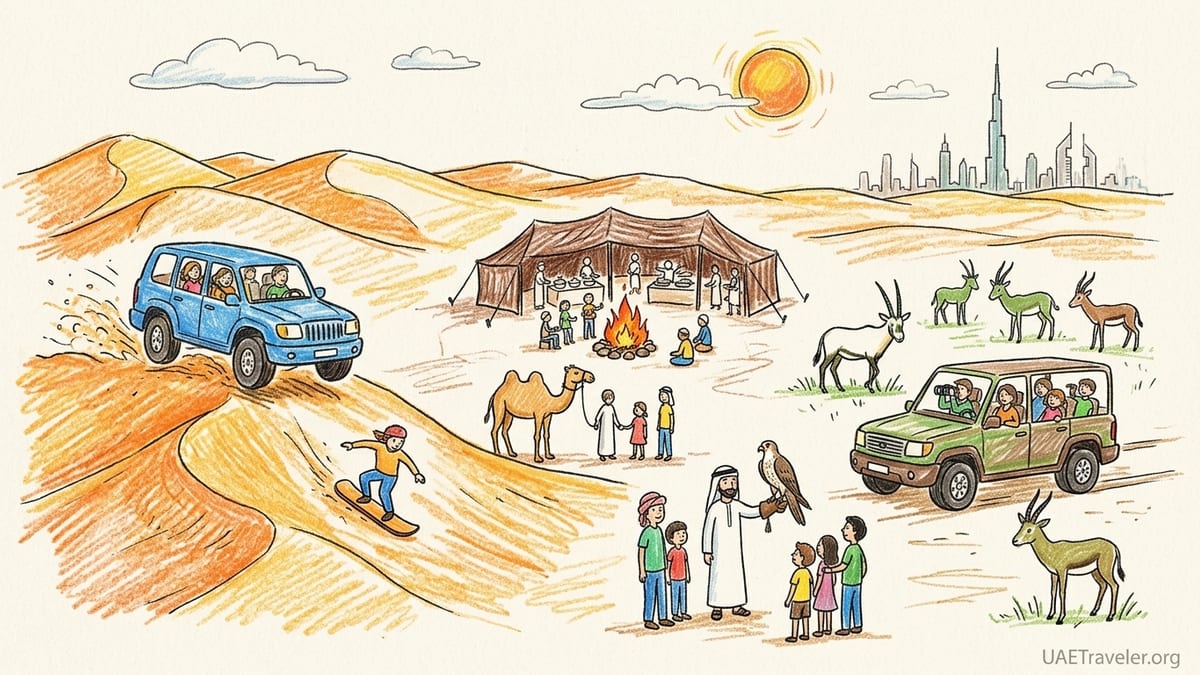
Types of Dubai Desert Safaris Explained
Most visitors encounter Dubai’s desert through an evening safari, which typically runs for about six to seven hours with hotel pickup in the mid afternoon and return to the city by around 9.30 or 10 p.m. Budget and midrange operators sell these as shared 4x4 tours, where up to six guests share a vehicle for a dune drive followed by a buffet dinner and entertainment at a central camp. As of late 2026, shared evening safaris with dune bashing, sandboarding, short camel rides, basic soft drinks and shows generally start between about 130 and 250 dirhams per adult based on price comparisons from local operators and citywide price guides that aggregate live listings for the current season.
Above the basic level are premium evening safaris and private-vehicle options. Premium shared safaris still use central camps but limit numbers per table, include upgraded menus or table service and often reserve front-row seating near the stage. Private-vehicle packages focus more on the drive and flexibility. A typical private evening safari with hotel pickup across urban Dubai, a dedicated 4x4 and dinner at a midrange camp is currently advertised from roughly 800 to 1,200 dirhams per private car for up to six people, according to operator tariffs and official experience marketplaces accessed in October 2026. These are the best-value choices for families who want control over pace and music without paying luxury-level rates.
Separate from the mainstream camps, conservation and heritage safaris operate inside the designated Dubai Desert Conservation Reserve through a small group of licensed providers. Companies such as Platinum Heritage and Arabian Adventures run wildlife-focused sunset drives in vintage or modern Land Rovers, followed by quieter Bedouin-style dinners in low-capacity camps. Prices are significantly higher than mass-market safaris, reflecting reserve access fees, restricted visitor numbers and the inclusion of naturalist guides. Recent rate sheets and official guides show shared conservation safaris with wildlife drive, falconry demonstration, camel ride and dinner typically priced around 600 to 900 dirhams per adult depending on drinks and season.
Other niche formats include morning safaris with sunrise desert vistas, quad-bike or buggy safaris that emphasise motorsports, sunrise hot-air balloon combinations that add dawn flights over the dunes, and true overnight stays in furnished tents or desert resorts. Morning and motorsports packages are usually shorter, around four hours from pickup to drop-off, while balloon and overnight experiences extend into the following morning with breakfast and, in some cases, shared wildlife drives during cooler hours.
Dune-Bashing Safaris vs Conservation Safaris
A conventional dune-bashing safari and a conservation safari can take place in the same general region of Dubai, but they deliver very different experiences. The standard dune-bashing trip focuses on the adrenaline of driving up and down soft dunes in a modern 4x4. After a 45- to 60-minute drive from urban Dubai, drivers spend roughly 20 to 40 minutes in a convoy performing controlled slides and descents, with a short photo stop at sunset. The rest of the evening is spent at a shared camp that may host several hundred guests for buffet dinner and staged performances such as belly dancing or tanoura shows. The desert landscape is present, but the emphasis is entertainment rather than ecology.
By contrast, a conservation safari inside the Dubai Desert Conservation Reserve is structured around understanding and protecting the desert environment. Licensed operators use specific tracks to minimise erosion and avoid dune cresting at high speed. Instead of vigorous dune bashing, guides lead slow wildlife drives lasting about 45 to 90 minutes, depending on the itinerary, pointing out species such as Arabian oryx and gazelles and explaining conservation work. Published program descriptions from reserve partners reference falconry demonstrations with historical context, camel caravans at walking pace and astronomy talks with minimal light pollution, rather than loud camp shows.
The meals and camps also differ. Mass-market camps are designed to serve high volumes quickly, with self-service buffets, open seating and brightly lit stages. Guests often queue for food and activities like henna painting or shisha. In conservation camps, dinner is plated or served in smaller buffets with defined courses, and capacities are typically in the dozens rather than hundreds. Accounts from recent travellers and operator brochures highlight quieter atmospheres, no amplified pop music during dinner and a clear focus on Emirati heritage through storytelling and traditional recipes.
From a pricing perspective, conservation safaris cost more than a typical dune-bashing evening but less than the highest-tier luxury private dinners. The premium goes toward conservation levies, guide training and lower guest-to-guide ratios. Travellers who feel anxious about aggressive driving, have back or neck concerns, or are bringing young children often find the gentler pace of a conservation safari more comfortable, even if they sacrifice the thrill of steep dune descents.
What You Actually Do: Activities and How Long They Take
Marketing pages for desert safaris list a long menu of inclusions, but the time spent on each activity is uneven. For a standard shared evening dune-bashing safari, the primary elements are hotel pickup, a dune drive, a brief sandboarding stop, a very short camel ride and extended time at the camp. In practice, with pickup from Deira, Bur Dubai, Downtown or the Marina between around 2.30 and 3.30 p.m., guests reach the edge of the desert after 45 to 75 minutes of driving. Convoys then spend roughly half an hour on dune driving, sometimes up to 40 minutes if traffic is light, with one or two stops for photos and optional sandboarding, which many guests try only for a few slides over 10 to 15 minutes.
The camel ride at mass-market camps is usually symbolic. Most operators offering budget packages provide a loop of two to five minutes around a small paddock, with queues forming in peak season. Unlimited camel rides advertised in brochures often translate into the opportunity to rejoin the line, rather than a long trek. Falconry at such camps tends to be a brief photo opportunity with a bird on the glove rather than a full demonstration. On the other hand, entertainment shows and dinner occupy most of the evening: expect about 60 to 90 minutes of free time, followed by up to an hour of staged performances.
Conservation focused and premium heritage safaris redistribute that time. Wildlife drives can occupy up to 90 minutes at slower speeds with frequent commentary. Camel rides become 15- to 30-minute journeys into quieter dunes, often timed for sunset. Falconry turns into a structured 20- to 30-minute educational display covering techniques and history. Camps in these programs generally offer multi-course dinners over 60 to 90 minutes, with low-key cultural performances or storytelling that run for another 30 to 45 minutes, rather than the louder stage shows of the mass camps.
Sandboarding, quad bikes and dune buggies appeal to visitors who want activity-heavy itineraries, but they also reduce time for other experiences. Operators that specialise in motorsports near the red dunes around Al Badayer and Lahbab often schedule 45 to 60 minutes of quad biking or buggy driving on marked areas. Evening packages that include both a driving session and a camp visit compress the time spent on wildlife viewing or sunset photography, so travellers need to decide whether their priority is adventure sports, landscape appreciation or a balanced mix.
Shared vs Private, Pickup Zones and Practicalities
Hotel pickup arrangements affect both time and comfort. Shared safaris collect guests from a series of hotels or central meeting points in neighbourhoods such as Deira, Bur Dubai, Downtown, Business Bay, Jumeirah and Dubai Marina. Operators typically ask guests to be ready in a 30-minute window and may spend another 30 to 45 minutes collecting others before leaving the city. Private safaris, offered by many operators and emphasised by premium brands such as Platinum Heritage and Arabian Adventures, allocate a dedicated 4x4 to your group. Drivers can then head directly to the desert once your party is on board, which saves time and allows short stops tailored to your interests.
Transfers from Abu Dhabi, Sharjah or other emirates are available but add both cost and travel time. Some Dubai-based operators publish add-on prices per vehicle for Abu Dhabi pickups, often in the range of several hundred dirhams per car on top of the safari price, reflecting the extra two to three hours of driving. Travellers staying in those cities sometimes choose to take intercity transport into Dubai and join a local safari from there to reduce costs and time in the vehicle.
Medical and age restrictions are broadly consistent across legitimate operators. Dune bashing in 4x4s and self-drive quad bikes or buggies are not recommended for pregnant travellers, guests with serious back, neck or heart issues, or very young children. Many mainstream providers state a minimum age of around five or six years for dune bashing and a higher minimum, often 12 to 16 years, for driving quad bikes. Families with toddlers or more cautious adults can book desert dinners or conservation drives without dune bashing, or request that drivers take gentler routes. Well regarded operators also supply child seats on request for infants and younger children during road transfers and gentle drives.
Facilities in the desert camps have improved. Most established operators provide permanent or semi-permanent toilets with running water or well-maintained portable units, separate areas for handwashing and shaded seating. Camp menus usually include vegetarian options, and many premium and conservation-focused camps can arrange vegan or gluten-free meals if told in advance. Alcohol service varies by operator and package, with some conservation safaris offering only soft drinks and others including unlimited soft drinks and optional alcoholic drinks at extra cost.
Prices and Total Costs for Couples and Families
Desert safari prices in Dubai for 2026 vary by season, but cross-checking operator websites, official visitor platforms and independent price guides produces clear ranges. Budget shared evening safaris with hotel pickup, dune bashing, a buffet dinner and standard camp entertainment are widely advertised from about 130 to 200 dirhams per adult and slightly less for children, with occasional promotional rates a bit below these figures in the shoulder seasons. For a couple, that means an approximate total of 260 to 400 dirhams, while a family of four with two children might pay roughly 450 to 700 dirhams depending on child discounts and any upsold extras such as “VIP seating” at the camp.
Midrange and premium shared evening safaris with more spacious seating, upgraded food and sometimes smaller camps cluster between about 250 and 450 dirhams per adult, per recent listings on major booking platforms and directly with Dubai-based operators. A couple selecting a midrange package with hotel pickup might expect to spend around 500 to 900 dirhams, while a family of four could see totals in the 900 to 1,600 dirham range once taxes and optional add-ons such as photos or extended camel rides are included.
Private 4x4 evening safaris that include dune bashing and dinner at a camp start at roughly 800 to 1,200 dirhams for a vehicle that seats up to six guests, according to recent tariffs published by operators and the official destination booking portal. For two adults, that works out at about 400 to 600 dirhams per person, while a family of four pays closer to 200 to 300 dirhams per person for more space, flexible pickup and the ability to request gentler driving. Conservation safaris, including those run by Platinum Heritage and Arabian Adventures inside the Dubai Desert Conservation Reserve, usually price shared vehicles per person. Publicly available 2026 rate examples for evening wildlife drives with dinner show adult prices in the region of 600 to 900 dirhams, so a couple might budget around 1,200 to 1,800 dirhams, and a family of four around 2,400 to 3,200 dirhams before any premium extras.
At the luxury end, private desert dinners and overnight stays rise sharply in price. Brochures and contracts for high-end Platinum Heritage programs and similar operators in the 2024 to 2026 seasons show private platinum-style safaris for two guests costing several thousand dirhams, with per-vehicle pricing stepping up as group size increases. Two adults booking a top-tier private dinner with chauffeured 4x4 transfers, extended wildlife drive, multi-course gourmet meal and optional overnight glamping should anticipate spending in the mid four-figure range in dirhams, while a family of four booking a private heritage-style overnight with tents and breakfast will often pay in the low to mid four figures in total, depending on month and specific inclusions.
Extras: Quad Bikes, Premium Seating, Photos and Balloon Combos
Optional add-ons can significantly increase the cost of a desert safari. Quad-bike and dune-buggy sessions are rarely included in the base price of budget or midrange packages, even when the brochure mentions them. Instead, guests are driven to a motorsports centre at the edge of the dunes and invited to pay extra for a 20- to 45-minute ride. Current prices at these centres, based on published tariffs checked in late 2026, often fall between 150 and 300 dirhams per person for quad bikes and higher amounts for two-seat dune buggies, which may approach or exceed 700 dirhams for an hour depending on engine size and route.
Premium seating upgrades at large camps can also appear modest in headline terms but add up for families. Operators offering a basic shared safari at around 150 to 200 dirhams per adult may charge an extra 50 to 100 dirhams per person for so-called VIP seating, which typically means front-row or raised sofas around the stage and table service instead of queuing at the buffet. For a family of four, this can double the effective per-person price of a budget safari. Travellers who value elbow room and shorter queues might instead pay more upfront for a midrange or conservation-focused camp that keeps numbers down without charging separately for seating tiers.
Photography and souvenirs are another cost category. Many camps host on-site photographers who capture guests during dune bashing, camel rides or with falcons. Packages of printed and digital photos are often quoted at around 100 to 250 dirhams, depending on quantity and presentation. Henna designs, shisha at the table and upgraded drinks can each add tens of dirhams per person. Guests should clarify with their driver or guide at the start of the evening which elements are genuinely included and which are offered by third-party vendors at the camp.
At the premium end, hot-air balloon and safari combinations offer a distinct experience. Balloon flights that launch around sunrise over desert areas outside Dubai city, combined with wildlife drives and breakfast, are marketed by specialist operators in the high three- to low four-figure range in dirhams per adult. For two adults, a morning balloon plus conservation safari combination in 2026 might therefore total several thousand dirhams. These packages are popular with couples and photographers who prioritise golden-hour light and aerial views over the evening camp atmosphere.
Overnight Desert Experiences vs Late-Night Camps
Many brochures use the word “overnight” loosely. A true overnight desert stay involves sleeping in the dunes or at a desert resort, with a bed in a tent or fixed room, overnight staff on site, and breakfast the next morning. Conservation and heritage operators offer such stays inside the Dubai Desert Conservation Reserve or on private desert land, with shared or private tents, proper bedding, bathrooms and morning wildlife activities. Recent rate sheets accessed during the 2024 to 2026 seasons show prices for these experiences starting in the low four-figure range in dirhams for two guests on a sharing basis and increasing for private arrangements.
By contrast, some mass-market operators advertise “overnight camps” that are closer to extended evening programs. In these, the core program follows the usual pattern of dune bashing, buffet dinner and shows, followed by optional stargazing, a basic sleeping area and early-morning tea before a return to Dubai. Facilities may consist of simple blankets or sleeping bags on camp cushions rather than dedicated tents or rooms. Bathrooms can be basic, and there is often little structured activity the next morning beyond watching sunrise and returning to the city. Prices for these basic overnight extensions are often quoted as an add-on of a few hundred dirhams per person on top of the evening safari rate.
Travellers should examine descriptions carefully to distinguish between these models. Key signals of a true overnight stay include mention of proper beds, private or semi-private tents or chalets, breakfast with specific timings, and smaller capacity. If the brochure emphasises “late-night camp stay,” “sleeping under the stars on cushions” and a return to the city immediately after sunrise without additional activities, the experience is likely an economical extension of a standard evening camp rather than a full desert retreat.
Those who value comfort or are travelling with children generally do better with recognised overnight programs by established conservation operators or by booking a night at an actual desert resort within or near the conservation reserve, reached by organised transfer rather than self-driving into remote dunes. This ensures 24-hour staff presence, reliable washrooms and air-conditioned spaces if needed, alongside access to guided activities such as morning wildlife drives, falconry or nature walks.
Safety, Heat and Why You Should Not Self-Drive into Remote Dunes
The desert surrounding Dubai looks inviting from the highway, but official tourism guidance and local safety briefings consistently warn against driving unaccompanied into remote dunes in unsuitable rental cars. In summer, daytime temperatures often exceed 40 degrees Celsius, with ground temperatures even higher on open sand. A stuck vehicle with limited water, no shade and intermittent mobile coverage can escalate quickly into a medical emergency. Licensed safari operators use maintained 4x4 vehicles with deflated tyres, recovery gear and drivers trained in off-road techniques and first aid.
Reputable desert safaris also time their activities to avoid the peak heat. Evening programs typically begin with hotel pickups in the mid to late afternoon, ensuring that dune driving and sunset stops occur as temperatures fall. Conservation safaris and hot-air balloon combinations schedule wildlife drives and flights at sunrise or just after, taking advantage of cooler air and more active animals. During the hottest months, some operators adjust timings, shorten drives or emphasise air-conditioned transport and shaded camp facilities to reduce guests’ exposure.
Medical considerations are particularly important for dune bashing and quad biking. The bouncing and lateral forces involved in driving across soft dunes can aggravate back and neck issues, and even healthy travellers occasionally report motion sickness. Many operators offer the option to skip the dune-bashing segment and be driven directly to the camp, or to join only the dinner portion of a desert experience inside the conservation reserve. Travellers who are pregnant, recovering from surgery or prone to car sickness should consider these alternatives or focus on heritage-style wildlife drives on flatter tracks.
Finally, cancellation and change policies matter because desert conditions can change quickly. Operators generally reserve the right to alter or cancel trips due to high winds, sandstorms or extreme heat, and many of the larger providers offer free cancellation up to a certain period before departure, often 24 hours or more for standard tours and longer windows for private and luxury bookings. Guests should verify these terms at booking, especially for high-value private safaris or balloon combinations, and ensure that their travel insurance covers non-refundable experiences in case of sudden illness.
The Takeaway
Dubai’s desert safari market between 2026 and 2027 offers everything from 130-dirham shared dune-bashing evenings to conservation-focused wildlife drives and multi-thousand-dirham private dinners under the stars. The key is to match your expectations and comfort level with the right format. Conventional dune-bashing safaris deliver high-energy driving and camp shows at accessible prices but devote relatively little time to camel riding, sandboarding or stargazing. Conservation and heritage safaris trade adrenaline for space, silence and wildlife, with longer drives at gentle speeds, meaningful falconry demonstrations and smaller Bedouin-style camps.
Shared vehicles are the most economical, though they involve multiple hotel pickups and less control over pace. Private 4x4s offer better value once you reach three or four travellers and are particularly appealing for families who need child seats, gentler driving and flexible photo stops. Luxury and overnight packages inside the Dubai Desert Conservation Reserve command higher prices but provide the most immersive desert experience, with true overnight stays, guided sunrise activities and chefs preparing multi-course meals away from the crowds.
Whatever your budget, booking with a licensed operator that publishes clear prices, realistic activity durations and transparent add-on costs is essential. Check that child ages, medical restrictions, pickup zones and cancellation terms suit your plans, especially during the peak winter season from November to March when demand is highest. Avoid self-driving into remote dunes in rental vehicles, stay hydrated and choose a format that respects both your limits and the fragile desert ecosystem.
Done well, a Dubai desert safari is more than a tourist box to tick. It can be an evening of adrenaline with friends, a quiet family encounter with wildlife, a romantic dinner for two in the dunes or a comfortable heritage experience without aggressive driving. With a clear understanding of the options, prices and trade-offs outlined here, you can make your desert excursion the highlight rather than the gamble of your visit to the United Arab Emirates.
FAQ
Q1. How much does a decent Dubai desert safari cost in 2026?
For a solid shared evening safari with hotel pickup, dune bashing, buffet dinner and camp shows, expect around 150 to 250 dirhams per adult, with slightly lower child rates and occasional promotions in shoulder seasons.
Q2. Is a conservation safari worth the higher price?
For travellers who value wildlife, quieter camps and gentler driving, conservation safaris inside the Dubai Desert Conservation Reserve are often worth the extra cost, as they provide longer wildlife drives, meaningful falconry and smaller guest numbers compared with mass-market camps.
Q3. How long do camel rides and sandboarding actually last?
On basic evening safaris, camel rides typically last only a few minutes in a small loop, and sandboarding might take 10 to 15 minutes during a photo stop, whereas heritage or conservation programs can offer 15- to 30-minute camel journeys and more time on the dunes if the group is interested.
Q4. Can young children join dune-bashing safaris?
Most reputable operators set minimum ages of around five or six years for dune bashing and advise against it for pregnant travellers or guests with back or neck problems, so families with toddlers usually either choose gentler conservation drives or join the camp-only portion of a safari.
Q5. What is the difference between a true overnight stay and a late-night camp?
A true overnight stay gives you a private or semi-private tent or room, proper beds, breakfast and morning activities, while late-night camps simply extend the evening program with basic sleeping arrangements and a dawn return to Dubai without full resort-style facilities.
Q6. Are quad bikes and dune buggies included in safari prices?
In most cases they are not included, and guests pay extra at desert motorsport centres, with recent prices commonly ranging from about 150 to 300 dirhams per person for quad bikes and more for two-seat dune buggies, so it is important to budget separately for these activities.
Q7. Which areas of Dubai do safari operators pick up from?
Licensed operators usually offer shared or private pickup from main hotel districts such as Deira, Bur Dubai, Downtown, Business Bay, Jumeirah and Dubai Marina, with surcharges or special arrangements required for more distant locations or other emirates.
Q8. Do desert safari camps have proper toilets and vegetarian food?
Most established camps now provide permanent or well-maintained portable toilets and include vegetarian dishes in their buffets, while premium and conservation-focused operators can arrange vegan or gluten-free meals on request if advised in advance.
Q9. Is it safe to drive a rental car into the desert myself?
Driving an ordinary rental car off-road into remote dunes is strongly discouraged because of soft sand, extreme heat, limited shade and recovery difficulties, so visitors are better off joining organised safaris with trained drivers and suitable 4x4 vehicles.
Q10. How far in advance should I book a desert safari?
In peak season from November to March, it is wise to book at least several days ahead, and for popular conservation, hot-air balloon or luxury overnight safaris, booking one to three weeks in advance offers the best chance of securing your preferred date and format.